포트폴리오

This service is available to members only.

Building a Simulation Environment for Distributed Resource Model Interworking

KERI

#Manufacturing, #Web

KERI

Korea Electrotechnology Research Institute (KERI) Distributed Resource Model Integration Simulation Environment Setup

Korea Electrotechnology Research Institute (KERI) is a leading research institute in the field of electrical engineering in South Korea, conducting research and development on various power systems and electrical devices. This project aims to establish a distributed resource model integration simulation environment within KERI's digital twin environment. IT7 successfully completed this project.

Portfolio Overview

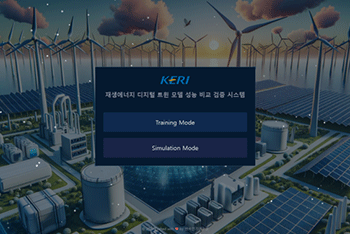
IT7 has built a system that operates training and simulation based on the given data in the client's digital twin environment, allowing users to visualize and verify the results. This system efficiently processes complex data and provides real-time results, offering significant convenience to users.

The design concept is based on training and simulation models. It is designed to call data as quickly and succinctly as possible using asynchronous call methods and backend APIs. This enables users to input data and verify results quickly and efficiently. Additionally, it supports the transmission of various file formats such as plain text data and CSV files, allowing for real-time receipt of results and visualization of data through charts. This system is configured as a stand-alone environment, enabling independent operation.

Scope of Work

The scope of this project includes the following:

  1. Requirement Collection: Systematically collected and analyzed customer requirements to set the project's direction.
  2. Storyboard Creation: Created detailed storyboards based on the collected requirements to visually express the overall flow and details of the project.
  3. Design: Conducted design work considering user interface (UI) and user experience (UX). Efforts were made to implement an intuitive and easy-to-use interface.
  4. Publishing: Published the designed UI to the actual web environment.
  5. Frontend/Backend Development: Developed the frontend using HTML5, CSS3, JavaScript, and jQuery, and implemented the backend using PHP and Python. Managed stable data with MariaDB.
  6. Unit Testing and Third-Party Testing: Conducted unit tests to confirm the normal operation of individual functions, and performed third-party testing to verify the integrated functionality of the system.
  7. User Testing: Final users directly used the system and provided feedback, allowing for the discovery and correction of issues in the actual usage environment.
  8. Release: Released the final system after passing all tests.

Key Features

The key features of this system are as follows:

  • Input of Training Data and Real-time Result Verification: Users can input training data, conduct training, and verify and visualize the results in real time.
  • Input of Simulation Data and Real-time Result Verification: Users can input simulation data, conduct simulations, and verify and visualize the results in real time.
  • Transmission of Various Types of Files and Data: The system supports various file formats, including text data and CSV files, allowing for data transmission and result generation.

Technologies Used

The main technologies used to build this system are as follows:

  • Server Configuration: Configured the server based on Ubuntu 20.04.
  • Backend: Implemented the backend using PHP and Python.
  • Database: Used MariaDB for stable and reliable data management.
  • Frontend: Developed a user-friendly interface using HTML5, CSS3, JavaScript, and jQuery.

Conclusion

Through this project, KERI has established a digital twin environment that efficiently processes and visualizes data in real time. IT7 faithfully reflected the client's requirements to develop an optimal system, enabling KERI to derive more accurate and reliable research results. This project is expected to significantly enhance KERI's research efficiency and contribute to the advancement of digital twin technology.

  • 2023.08~2023.12
  • KERI